
- Details
- Written by: Ricardo Matosinhos
• Terms & Conditions
• Repertoire • F.A.Q.
• Apply
• Flyer🇬🇧 • Flyer🇵🇹


- Details
- Written by: Ricardo Matosinhos
Accept this challenge and learn any music scale really fast. Side effects: you will start enjoying practicing scales and dedicate more time working on the bases of your instrument!
- Details
- Written by: Ricardo Matosinhos
It is a simple and effective exercise to work on breath control and the airflow passing through the lip aperture.
A common question, especially among younger players:
“Do I really need a lot of air to play the horn?”
Naturally, when playing in extreme registers or at more intense dynamics, a greater amount of air is required. However, in the middle register in soft dynamics, the amount of air needed to play the horn is not that significant.
In most cases, the horn player needs to stop playing to replenish oxygen, even though they still have air left. If that doesn’t happen, there are two possibilities: either they didn’t take in enough air, or their lip aperture might be too wide, causing excessive air consumption with little sound production.
Examples such as the transition between the Adagio and Rondo of Beethoven’s Emperor Concerto, where the horns sustain an F that seems to last forever while the pianist savors each note, require the horn player to hold notes for a considerable duration. This becomes even more challenging for the second horn, as the note is an octave lower…
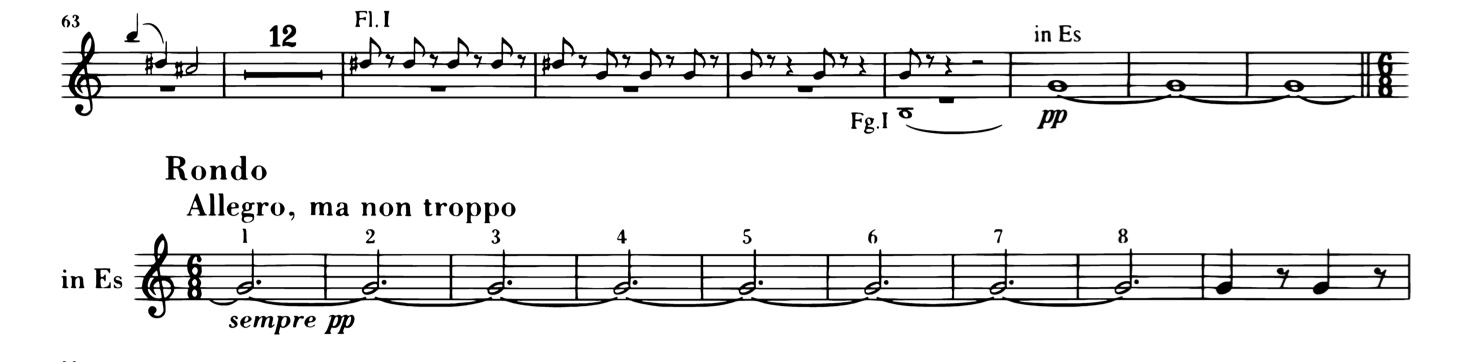
I also conducted a reverse experiment using the corks of a natural horn. The amount of air used didn’t change significantly, but as expected, notes in the mid-range could be sustained for longer. In certain dynamics and registers, I had to breathe in oxygen despite still having air in my lungs. One challenge is that maintaining the same dynamic level is difficult, since playing inside a balloon masks the actual dynamic. Additionally, the resistance of the balloon’s air pressure feels very different from playing a real horn. It wasn’t a scientific experiment, as many parameters were not controlled. Still, it’s fascinating to visually observe the amount of air required for a given passage.
- Details
- Written by: Ricardo Matosinhos
A Stream Deck with Notation Express can make your work in Dorico much faster and more efficient. For anyone who needs to access a specific function or macro quickly, I’ve created a video explaining how to customize the Notation Express plugin (Scoring Notes ) with a Stream Deck. The Notation Express plugin is available here: https://www.notationcentral.com/product/notation-express-xl-stream-deck-profile-for-dorico/
You can download here two Finder quick actions I mention on the video